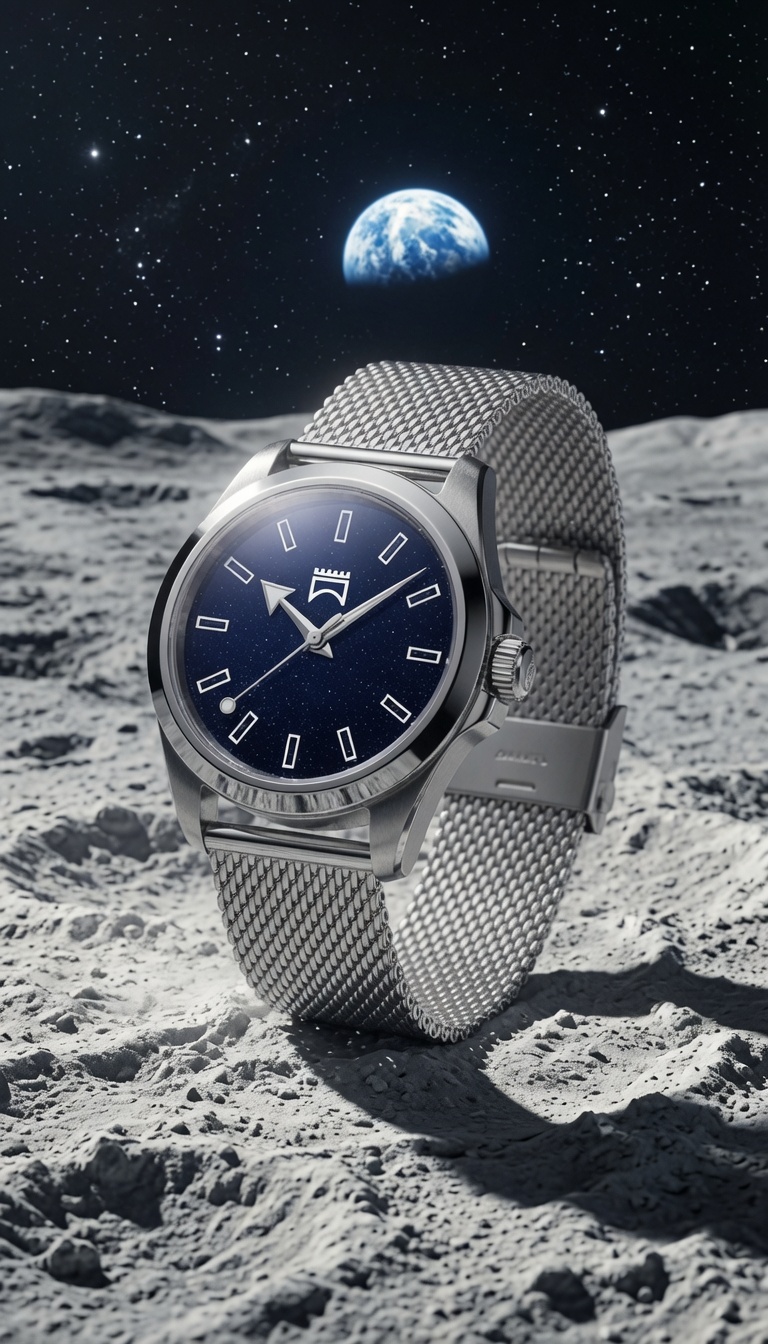
The Slaidburn Atelier Switzerland · Two days · By invitation

Your watch,
drawn with you

Not a configurator. Not a choice of three straps. A full session at the bench in Switzerland with both of our master watchmakers either side of you, designing a timepiece from a blank sheet — and two days built around you while you do it.

Register Your Interest Flown from the UK · Everything looked after

Most people never meet
the hands that made it.

You can already buy a watch with your initials on the caseback and call it bespoke. We wanted to build the opposite of that — an experience where the design genuinely starts empty, where you sit at a real bench with the two people who will physically make the thing, and where every decision from the curve of the lugs to the colour of the seconds hand is argued out with you in the room.

So we fly you from the UK into the Swiss Jura, the narrow band of high, cold country where watchmaking was invented and where most of it still happens. On the first day you look at three centuries of the craft and we show you where your watch would sit inside that story. On the second day you design it.

Everything in between — the flights, the car, the room, the table, the wine — is ours to worry about. You are here to do one thing, and we would rather you arrived at the bench thinking about nothing else.
i.

What we take care of

01

Return flights from the UK

Booked and paid by us, for you and one guest, from the airport nearest to you that we can sensibly fly from.

02

Private cars at both ends

One from your front door, one waiting when you land. You are not asked to organise, book or claim back anything.

03

One night above the lake

A room in a small hotel near Neuchâtel, chosen for quiet rather than for a name on the door.

04

Every meal

Two lunches, dinner and breakfast, with the wine. Nothing is presented to you on a bill at any point.

05

A private guided visit to the archive

Arranged for your group alone at the Musée International d'Horlogerie, with a guide, and with time to actually stop and look.

06

The component table

Every part that could go into your watch, laid out in front of you, named, and traced back to the workshop it came from.

07

The design session itself

Both of our master watchmakers, at one bench, with nothing else in their diary that afternoon.

08

Your drawings, either way

The sketches and the written specification are yours to keep whether or not you go on to order the watch.

The Two Days

An itinerary, not a tour

Day One — Arrival & the Archive
Morning

A car at your door

Collected from home at a time we agree around your own morning, not around a schedule we hand you. The only thing asked of you is a passport.

Midday

UK to Switzerland

Flights in your name, from your nearest workable airport. Someone from Slaidburn is on the other side of arrivals.

Early afternoon

North, into the Jura

The road leaves the vineyards on the lake and climbs. Within the hour the landscape is limestone, pine and fog — a region that produces very little except watches and the people who make them.

Afternoon

Lunch, and the only question that matters

Over a long table we ask what this watch is actually for, and who it is really for. Not your case size — the reason. Everything we suggest for the next twenty-four hours comes out of your answer, so we take our time over it.

Late afternoon

The Musée International d'Horlogerie, privately

A guided visit arranged for your group alone, in one of the great horological collections in the world. Not a shuffle past the cabinets — we walk it with you, stopping at the pieces that speak to the watch you have just described over lunch.

Evening

Dinner, with no clock on it

Back down at the lake. A menu built around what the region grows, paired from the cellar. Your watchmakers eat with you.

Night

The room

Small hotel, quiet, above the water. Nothing else asked of you until breakfast.

Day Two — The Bench
Breakfast

On the terrace, unhurried

You will want to be sharp for what follows. We start when you are ready.

Morning

The component table

A felt-lined tray, and every part that could go into your watch taken out one at a time and put under a loupe. What it does, who cut it, in which valley, and honestly why we chose that workshop over the others. By the end of it you understand your own watch better than most people understand the one they already own.

Afternoon

The design session — both watchmakers, one bench

Case profile and lug geometry against your actual wrist. Dial material, texture and colour. Hand shape, indices, the movement finishing, the rotor, the strap and its stitch, the caseback and what is written on it. You draw; they tell you plainly what will work and what will not, and why. It runs until the design is settled — there is nothing in their diary behind it.

Late afternoon

The specification, written up and signed

Drawn up while you eat and brought to the table — every dimension, material and finish, in writing. If you want the watch, you sign it and so do they. If you want to go home and think, you take it with you.

Evening

The same car, and home

Back to Geneva and back to your own door, with the same absence of arrangements as the way out.

A Slaidburn timepiece under close inspection
La Chaux-de-Fonds · Neuchâtel Musée International d'Horlogerie
The Archive

Three centuries of the craft,
and where yours would sit

The MIH is not a brand's shop window. It belongs to the city, it takes nobody's side, and it holds the whole story — sixteenth-century table clocks, the marine chronometers that solved longitude, the tourbillon, the quartz crisis that nearly ended the industry, and the revival that followed.

It sits in La Chaux-de-Fonds, a town built so completely around watchmaking that UNESCO listed the street plan itself: long parallel terraces laid out so every workshop window faced the same northern light.

We do not walk you through it as a tourist. You have just spent lunch telling us what your watch is for, and this is where we show you the two hundred years of people who tried to solve the same problem.

~4,500 Timepieces held
1902 Collection begun
2009 The town, UNESCO listed
Provenance

Every part has a
postcode and a reason

A fine watch is a couple of hundred objects made by perhaps a dozen workshops, most of which are never named to the person wearing them. On the second morning we name them, and you decide between them. This is the table you will be sitting in front of.

01
Movement
Vallée de Joux & Le Locle
Swiss automatic. You choose the base calibre, how far the finishing goes, and whether the rotor is skeletonised so the movement is worth turning over.
02
Balance spring
The Jura arc
The hardest component in the watch to make, and much of the reason this industry never left these valleys. Anti-magnetic alloy, drawn to a thickness measured in microns.
03
Aventurine dial
Murano, Venice
Not a stone — a glass with copper suspended in it, found by accident on Murano in the seventeenth century: a ventura, by chance. Cut and polished by hand, so no two dials carry the same stars.
04
Sapphire crystal
Grown, then cut in Switzerland
Flat, domed or box, with anti-reflective coating on the inner face so the glass disappears and the dial appears to sit in open air.
05
Case & lugs
Machined in the Jura, finished by hand
Steel or precious metal. The chamfers are polished by hand against a wooden lap — the operation no machine has yet done convincingly, and the one your eye notices without knowing why.
06
Hands & indices
Applied by hand, Neuchâtel
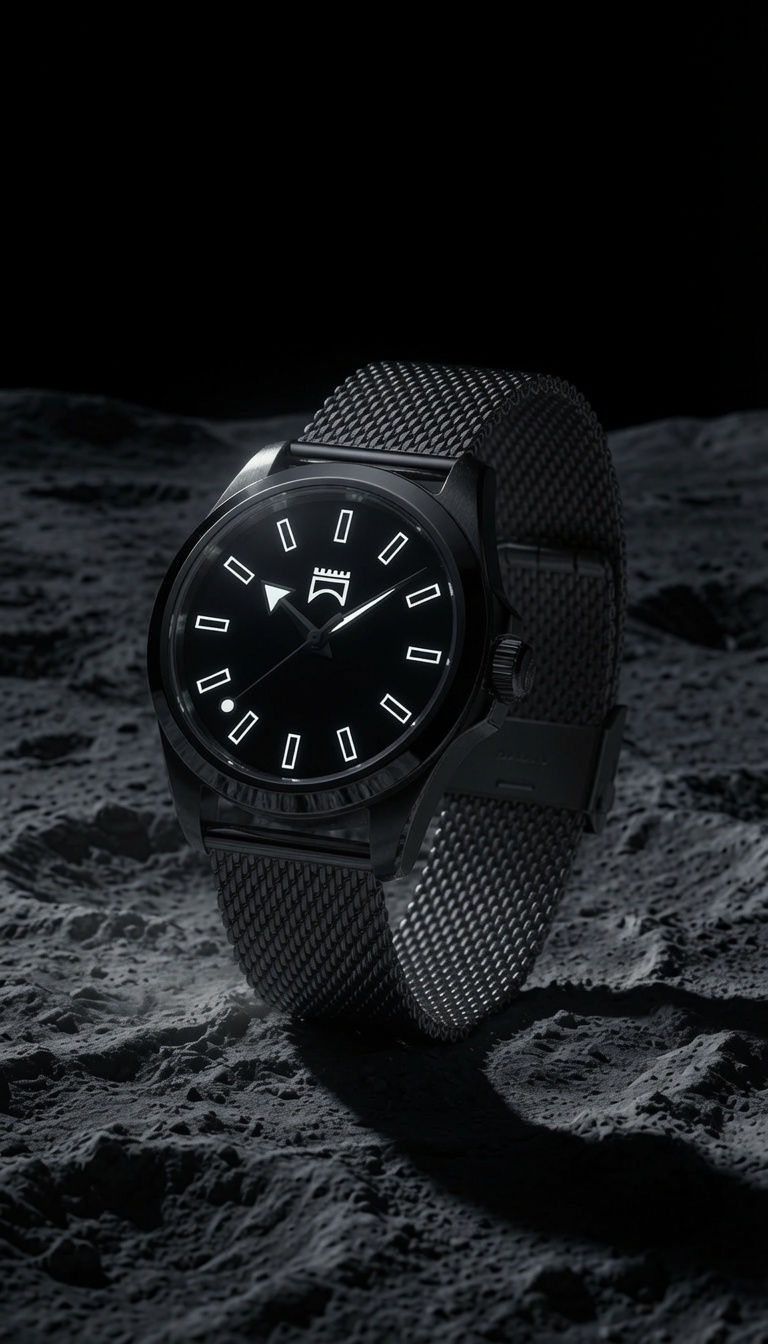
Heat-blued, flame-polished or rhodium-plated. Indices set one at a time; on a dial done properly, the light catches every one of them at once.
07
Strap
Vegetable-tanned, Tuscany
Tanned over weeks in pits rather than hours in a drum, then cut, skived and saddle-stitched to the wrist we measured at the bench.
08
The caseback
Slaidburn, Lancashire
Engraved in England with the date the design was signed and whatever you decide belongs there. This is the part we keep at home.
The Bench

Both of our master watchmakers.
The same afternoon.

Master of the Movement

The first hand

He is the one who will tell you no, and explain it. Calibre choice, power reserve, what a case that thin can honestly hold, and every question of finishing — Côtes de Genève, perlage, black polish, the anglage on a bridge that only the two of you will ever see.

Years at a bench teach you that most design problems are really tolerance problems. He solves them in front of you rather than sending them away.

With you for the whole session
Master of Case & Dial

The second hand

She works in millimetres and light. Lug curvature against your particular wrist, case proportion, dial material and texture, hand shape, and where the light will break across the bezel when you turn your arm to read it.

You draw together, on paper, at the same table. The sketches go home with you regardless of what you decide afterwards.

With you for the whole session
Shaped Around You

Nothing about this
is off a shelf

01

Your days, your pace

The times on the itinerary are a shape, not a timetable. If lunch runs long because the conversation is good, everything after it moves. Nobody will hurry you out of a room.

02

One point of contact, throughout

The same person plans your two days, meets you at the airport and answers your messages afterwards. You are never handed on to a department, and there is no salesperson in any of it.

03

Yours alone, that day

The bench, the museum visit and both watchmakers are booked for you and your guest — never shared with another group, never overlapped with another commission.

Anyone can sell you a watch. Very few people will sit down and let you draw one.
Slaidburn · Lancashire, England
Departure

What comes home with you

01

The drawings

The working sketches from the bench, on the paper they were drawn on, initialled and dated. Yours to keep whatever you decide next.

02

The written specification

Every dimension, material, finish and tolerance, set out in full and countersigned by both watchmakers. It is the quote and the record in one document.

03

A design that is only yours

If you go ahead, the watch is built to that specification and the design is not offered to anyone else. If you do not, the drawings are still yours and we will not use them.

Straight Answers

The questions we are asked

The two days are ours — the flights, the car, the room, the meals and the museum are not added to anything. The watch is priced from the specification you sign, because the movement and the case metal move the figure considerably and quoting before that conversation would be guesswork. Register your interest and we will send you the full document, including the price range you would be working within, before you are asked for anything at all.

No. You are committing to two days in Switzerland and an honest conversation. If at the end of the session the watch is not for you, you keep the drawings and the specification and we part on good terms. We would rather lose the order than build something somebody was talked into — it ends up on a wrist for thirty years, and we would like it to be right.

Yes — one guest, travelling, staying and eating on the same terms, at no extra cost. They are welcome at the archive and at the bench. In practice most people bring the person the watch is quietly about, and the design is usually better for it.

Rarely, and deliberately so. Both watchmakers have to clear a full day, and they are only two people, so we run a small number each year and never two at once. Dates are arranged with you personally around your diary rather than offered from a list.

Several months, and how many depends on what you design — a stone or glass dial and a heavily finished movement both add time. We give you a target date in writing once the specification is signed rather than a number now, and we would rather quote long and deliver early. You are sent photography as it is built.

Tell us on the form or afterwards and we build the two days around them — dietary, mobility, medical, or simply a preference about how and when you travel. Where something genuinely cannot be arranged we will say so plainly and early rather than let you find out in Switzerland.

Register Your Interest

Start with a
conversation

No obligation, no deposit and no salesperson. We send you the full document — the itinerary, what you would be choosing between, and the price range — and if it is for you, we find dates. If it is not, you will not hear from us again.

A person replies, not a system